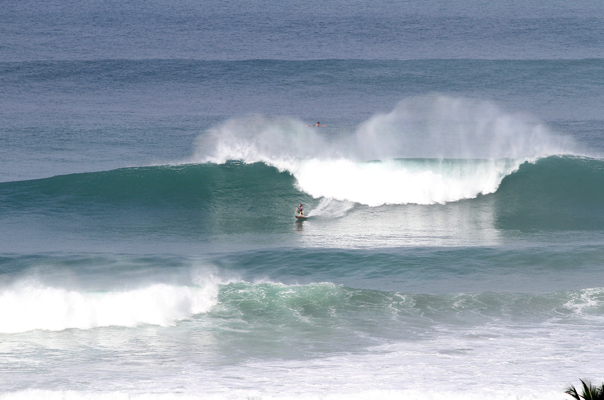
It’s a long paddle out to the line-up at Tres Palmas from Steps Beach, but feeling ready to surf the break was a much longer process. The last time I was in Rincon, PR was almost 12 years ago during spring break. On that trip I experienced one day that was on the edge of what my board could handle. On this trip there were 5 or 6 days on that edge and for at least 3 of those days I would have had a lot more fun on a 6’6” or 6’10” at Maria’s, Dogman’s or Pistons. The day I surfed Tres the swell was essentially 10 ft. @ 15 seconds and it seemed like my options were either rent a board big enough for Tres or spend the day watching from the beach.
A couple days prior to the swell I told everyone I was 50/50 on whether I’d surf Tres this trip. When it started to seem like Tres was going to be the only break in Rincon that could handle the size I started listing reasons why I thought I could do it to get in the right headspace:
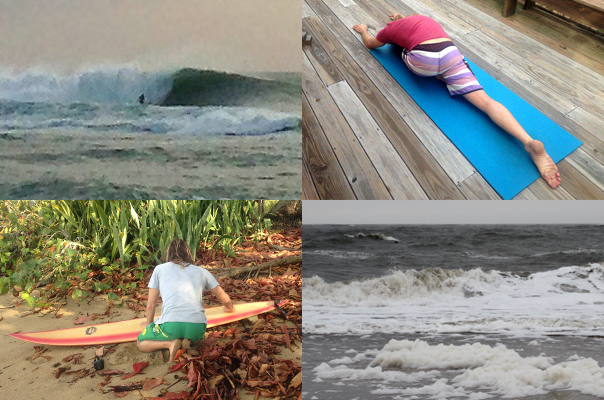
– I successfully scratched into two waves on my 6’1” at Dogmans the night before when it was 6 to 8 ft. @ 14 to 15 seconds. In Florida the surf from hurricanes Irene and Sandy was heavy but I hadn’t experienced anything close to the kind of deep water waves I was going to see out there since my time living in Southern California. This was the most important thing I did to feel prepared.
– During my last year in Encinitas, CA I was surfing Blacks Beach a lot. I was a regular face in the line-up and had a 6’6” made that I thought would go better than my standard shortboard when it was around double overhead. This experience gave me a much better frame of reference on what to expect than I had during my first trip to PR. There is a type of wipe out (or sometimes a wall of water to get through) where you patiently bide your time under water to conserve air until a moment when attempting to get to the surface is less futile. Blacks taught me that.
– Taylor Knox’s SurfFit and Yoga for Surfers featuring Rochelle Ballard were part of my routine in the two months leading up to the trip. As much as I like to consider surfing my gym these exercise programs showed me that my core could be a lot stronger with focused surf specific exercise than from just surfing Florida waves a couple times a week. We started a fitness regimen a couple months before the trip to get the most out of our money and time spent in PR and it was one more reason I felt like I could be confident out in the water pushing my limits.
– I surf decent-sized windswell in 55 degree water wearing a 4:3 wetsuit regularly. One thing I couldn’t duplicate or work on in a land based program however was paddling. By the second week of the trip I was extremely confident in my paddling and swimming and I credit that to paddling out in ugly, head high Northeast wind swell in my 4:3 every chance I got before the trip.
– Bobby of Mar Azul Surf Shop helped me get my equipment dialed. As soon as they opened that morning he put me on a heavy glassed 8’8” by local shaper Jose Muniz with a hand tied big wave leash from a company called Stay Covered out of Oceanside, CA. He bragged about the leash as I hooked it through both leash plugs on the board and after seeing scores of broken leashes that day I was glad I had one worth bragging about.
– I was told that riding a big wave board was like riding a longboard. In the year leading up to this trip I’d been longboarding whenever conditions seemed to call for it which was nearly as much as I was shortboarding.
– There were other people out. Once in the water I was grateful for the light crowd. The wave was so far out to sea that finding a line-up and figuring how far out you needed to sit to be safe was daunting. I observed that there were at least three places or distances out that waves would break and it was incredible how big the waves that were too small to break were when you were sitting in the right place.

Despite all of my preparation, big wave surfing was like learning to surf all over again. I looked to others to figure out where to sit, when I put my head down and committed to paddling for a wave I was so focused that it was hard to keep track of everything going on around me, I acted much more on sensation than awareness, and the proper level of fitness was extremely important. Hopefully this experience is one more step in pushing the limits of my personal surfing. Next time I’ll be looking to go a little bigger and a little deeper than before.
